
I’ve noticed something changing in the last two years.
The parents walking into my space in Ahmedabad aren’t coming because their child failed an exam. They aren’t coming because a school counsellor flagged a “behaviour issue.” They aren’t coming because something dramatic happened.
They’re coming because of a feeling. A quiet, persistent feeling that something is missing in their child’s life and no amount of tuition, personality development classes, summer camps, or new schools is addressing it.
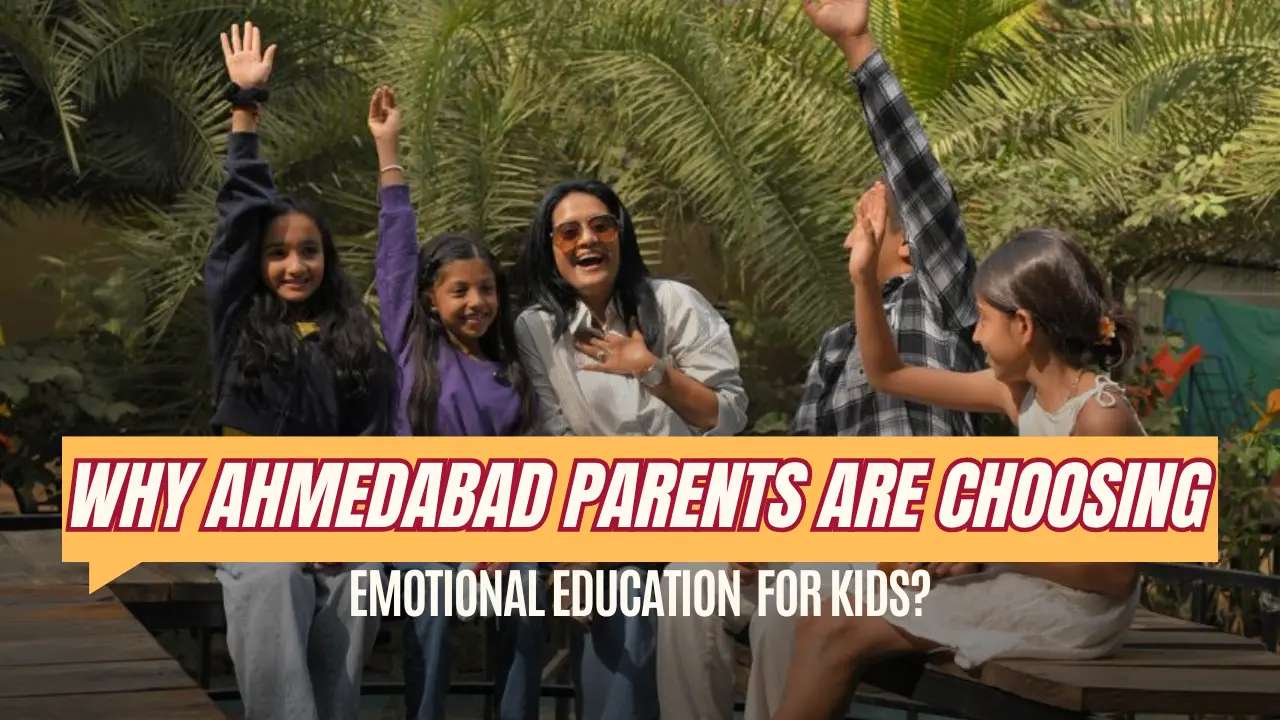
That’s why Emotional education for kids in Ahmedabad is no longer a fringe concept. It’s becoming the conscious choice of parents who understand that marks prepare their child for exams but emotional capacity prepares their child for life.
What Schools in Ahmedabad Teach and What They Don’t
I want to be clear I respect what schools do. The best schools in Ahmedabad deliver strong academics, good infrastructure, and genuine care for students.
Some have introduced “life skills” or “value education” periods. That’s a step in the right direction.
But a 40-minute value education period once a week is not emotional education. It’s a checkbox. And I say this with respect, not criticism.
Here’s what I haven’t seen in any school curriculum in Ahmedabad CBSE, ICSE, or state board:
- How to recognise what you’re feeling in your body before it becomes an outburst.
- How to name the difference between frustration and disappointment
- How to sit with failure without it defining your self-worth.
- How to say “I’m struggling” without believing it makes you weak.
- How to navigate a friendship conflict without either exploding or disappearing.
Your child learns 12 subjects in school. Not one of them covers how their own mind and emotions work.
And here’s why that matters:
Social emotional wellness isn’t a “nice to have.” It’s the one skill set that determines how your child uses everything else they learn.
A child with academic knowledge but no emotional capacity is like a powerful car with no steering. Fast but heading for a crash.
Why Ahmedabad Parents Are Choosing Emotional Education (Not Therapy)
This is where most parents get stuck. They see their child struggling and think do I need a therapist? A personality development class? A different tuition? More activities?
I hear this confusion every week. So let me make it simple. There are three paths. They do three very different things.
- Therapy and Counselling exists to fix a diagnosed problem. Anxiety disorder. Depression. Trauma. ADHD. It’s clinical, it’s essential when needed, and I’ll always recommend it when it’s the right call.
But most children who are emotionally struggling don’t need therapy. They don’t have a disorder. They have a gap between what they feel and what they were ever taught to do with those feelings.
Your role as a parent here: hand your child to a clinical expert and wait. - Personality Development Classes exist to build external skills. Public speaking. Stage confidence. Body language. Social etiquette. Useful skills genuinely.
But a child who can speak beautifully on stage may still fall apart when left out of a friend group. A child with perfect eye contact may still not be able to tell you what’s actually bothering them at home. Surface confidence without internal capacity is a performance.
And performances crumble under real pressure. Your role as a parent here: drop and collect.
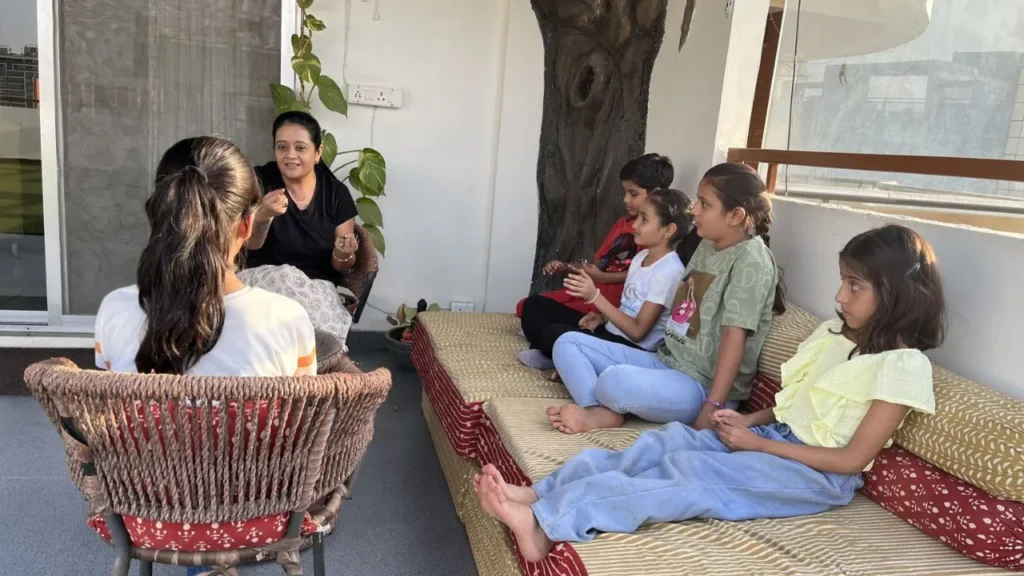
Emotional Inner Literacy Education exists to build self-understanding. Not fixing a diagnosis. Not polishing a presentation.
This is child emotional development at the deepest level. And your role as a parent here: you’re invited into the process. You don’t hand your child off. You understand your child alongside them. The family grows together.
Parents in Ahmedabad are choosing emotional coaching because they don’t want to wait until their child is struggling to start. They want to build the foundation before life demands it.
5 Reasons Ahmedabad Parents Are Enrolling Their Children in Emotional Education Programs
1. Their Child Is Smart But Emotionally Struggling
Their child tops the class but can’t handle criticism. Solves complex problems on paper but dissolves over a small disappointment. Gets praise from teachers but comes home irritable, anxious, or shut down.
I see this in almost every family I work with. Academic intelligence and emotional capacity are two completely different things. And one without the other creates a child who functions well but feels fragile inside.
2. Outbursts, Anxiety, and Withdrawal Are Increasing
The homework meltdown that seems way too big for the situation. The phone that can’t be put down without a war. The child who used to share everything now gives you one-word answers and a closed door.
“Nearly 3 out of 4 teenagers in India carry academic pressure that shows up as anxiety, withdrawal, or explosions at home”
Child anxiety and emotional support isn’t a niche concern anymore it’s the most common reason parents reach out to me in Ahmedabad. And the longer these patterns go unaddressed, the deeper they set.
3. Schools Still Don’t Teach This
Twelve subjects. Zero about how their own emotions work. Even the most progressive schools in Ahmedabad don’t have a dedicated social emotional learning curriculum not the real kind.
Parents are filling this gap themselves because they’ve accepted that no school report card will ever measure the one thing that matters most.
4. The Parent-Child Relationship Is Strained
When every conversation becomes a negotiation. When every request becomes an argument. When you know your child is hurting but they won’t let you in.
Something is breaking between you and it’s not the love. It’s the communication. Emotional coaching for kids doesn’t just help your child. It changes the space between you.
5. They Want to Be Proactive, Not Reactive
You don’t wait for your child to get sick to teach them about health. You don’t wait until they can’t swim to throw them in deep water. So why would you wait until they’re emotionally breaking to teach them about emotions?
The window between ages 8 and 14 is when emotional capacity is built most effectively. Every month you wait is a month of foundation not laid.
What Emotional Coaching for Children Actually Looks Like
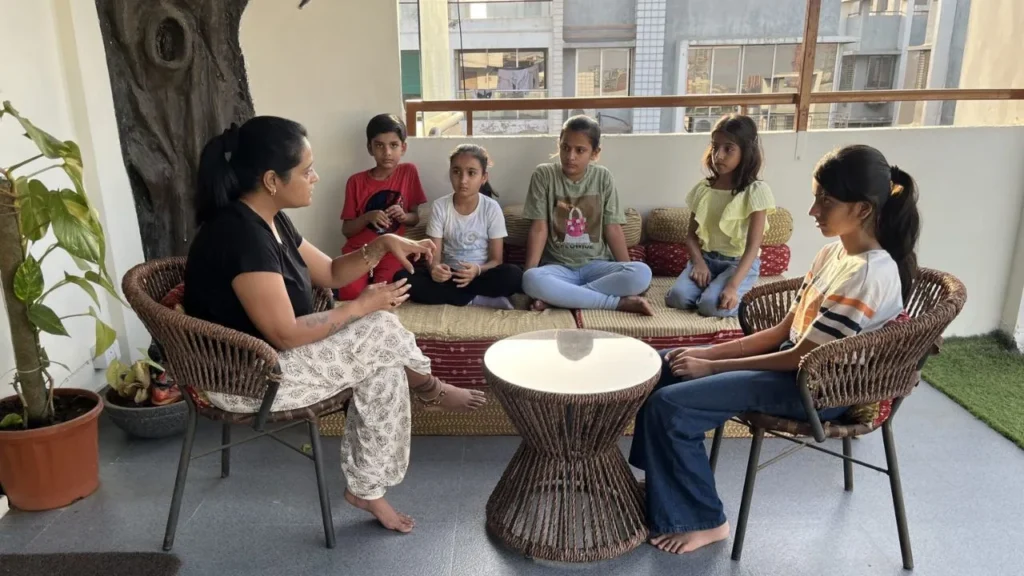
Forget what you imagine. It’s not a therapy couch. It’s not a classroom with worksheets. It’s not a lecture about feelings.
Here’s what it actually looks like when a child goes through Inner Literacy Education in Ahmedabad:
They learn to notice what emotions feel like in their body the tight chest before the outburst, the stomach drop before the tears, the clenched jaw before the snapping.
They learn to name what they feel with precision not just “I’m fine” and “I’m angry,” but “I feel excluded,” “I’m overwhelmed,” “I’m scared I’m not good enough.” When a child can name it, the behaviour changes on its own. The emotion no longer needs to scream through behaviour to be heard. It has words.
They learn to pause before reacting not from fear of punishment, but from genuine understanding of what’s happening inside. This is self-regulation. Not suppression. Choice.
And they learn it through simple, practical tools drawn from everyday life school, friends, family tools they can use the same day.
Here’s what surprises parents most: children love it. Not a single child in my program has ever wanted to miss a session.
Is Emotional Coaching Right for Your Child?
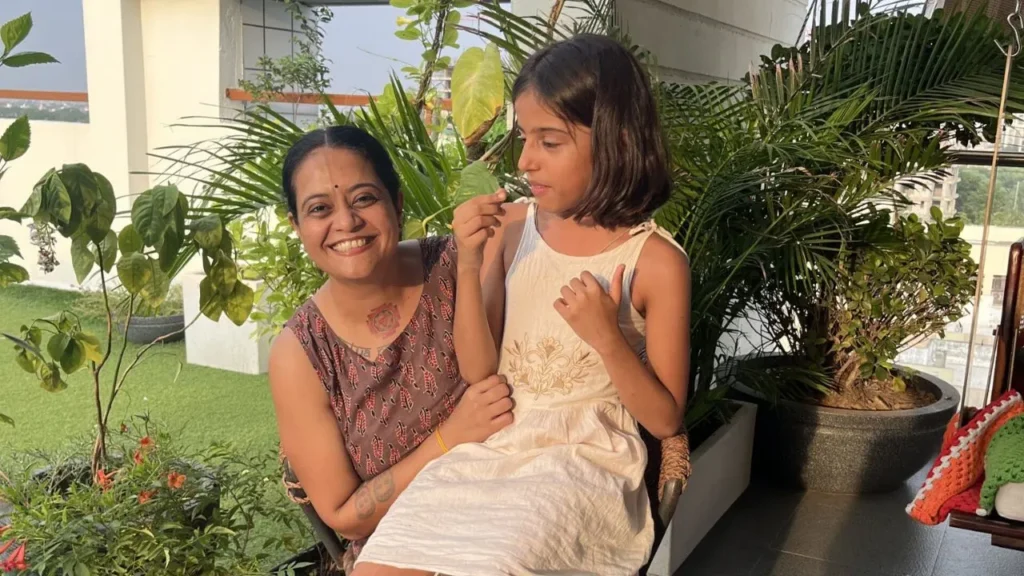
Emotional education is for any child with an inner world. Which is every child.
It’s especially valuable if your child reacts disproportionately to small things. If they’ve gone quiet and you can’t reach them. If screens have become their only way to feel okay.
But here’s what most parents miss it’s equally valuable for the child who seems “fine.” Because “fine” usually means “functioning.” And functioning is not thriving.
You don’t enrol because something is wrong. You enrol because you want your child to have what no school, no tuition, and no personality development class gives them the ability to understand themselves from the inside out.
Finding Emotional Coaching for Kids in Ahmedabad
Emotional education programs for children are still rare across India. Most cities have nothing.
In Ahmedabad, The Becoming is Gujarat’s first and only Inner Literacy Education program built for children aged 8 to 14 who deserve to understand how their own mind, body, and emotions work.
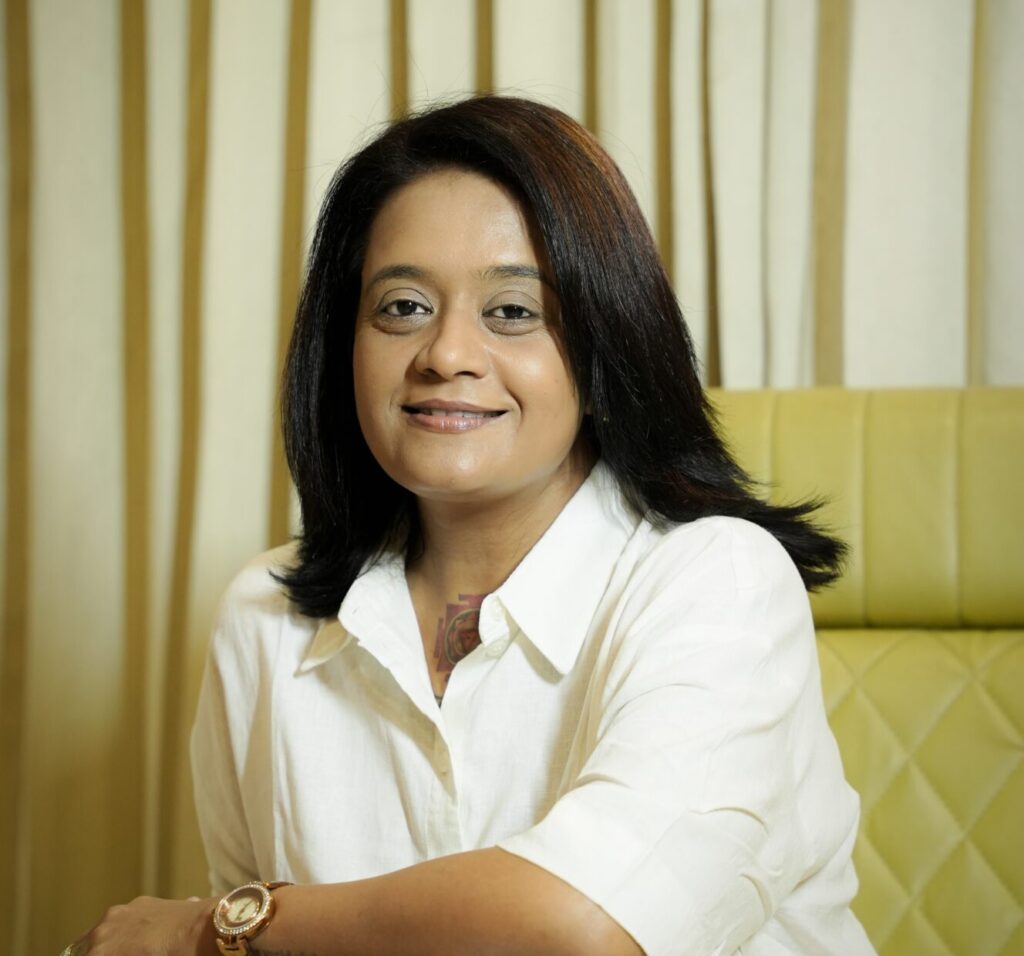
6 months. 24 sessions. Every Sunday. Small batches of 8 to 10 children. Created and guided by me, RasEsha Rabari 9+ years of practice in NLP and Neuro-Associative Conditioning, ICF certified, 300+ families served, and a mother of two grown adults who has lived every stage your child is going through.
If you want to start, begin with the Understanding Your Child form. 13 honest questions. 5 minutes. It helps you see your child’s emotional world clearly and helps me understand your child before we ever speak.
Frequently Asked Questions
Q1: What is emotional coaching for children?
It teaches children how to recognise, name, and work with their emotions instead of acting them out through behaviour. Practical tools they can use the same day at home, at school, with friends. Not therapy. Not lectures. Education for the inner world.
Q2: Is emotional coaching the same as therapy?
No. Therapy treats diagnosed conditions like anxiety disorders or depression. Emotional coaching is education that builds emotional capacity in any child, whether they’re currently struggling or not. One is treatment. The other is foundation. They’re different but they complement each other well.
Q3: At what age should children start emotional education?
The ideal window is 8 to 14. This is when the brain undergoes its most intense emotional restructuring feelings intensify, identity forms, social complexity increases. The tools learned during this window become the emotional foundation they carry for life. Start here, and everything that follows sits on solid ground.
Q4: Are there emotional coaching programs for kids in Ahmedabad?
Yes. The Becoming by RasEsha Rabari is Gujarat’s first and only Inner Literacy Education program for children aged 8–14. Every Sunday in Ahmedabad. Small batches of 8–10 children. 6 months. 24 sessions. Guided personally by RasEsha not a franchise, not a recorded course, not a classroom.
Q5: How is emotional coaching different from personality development classes?
Personality development teaches how to appear confident, stage presence, speaking skills, social etiquette. Emotional coaching teaches how to actually BE confident from genuine self-understanding, not performance. A child with personality development can speak on stage. A child with emotional education can handle life.