
Everything Indian parents need to know and everything no school will ever teach.
If you’re reading this, you’re probably one of two kinds of parents.
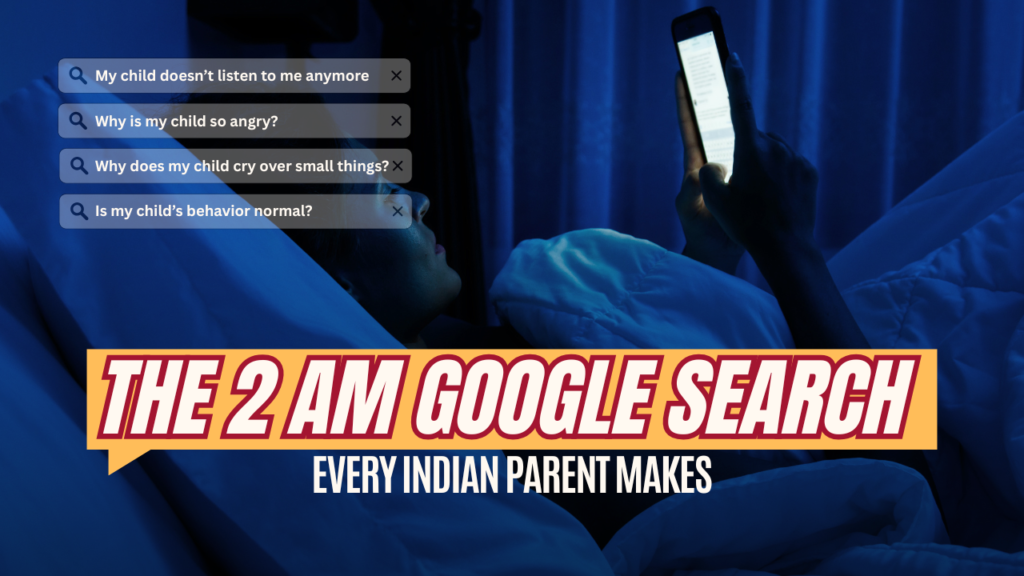
Either something is already going wrong, your child’s behaviour has changed, their mood is unpredictable, they’ve stopped talking to you, they explode over small things, or they’ve disappeared into their phone and you’re looking for answers.
Or nothing is visibly wrong yet but you have a quiet feeling that your child is missing something. That school is covering academics but not the deeper stuff. That your child is smart but not emotionally equipped. That the world is getting harder and your child’s inner foundation isn’t keeping up.
Either way, you’re in the right place. And the fact that you’re here tells me something important about you: you care beyond marks. Beyond performance. Beyond what the world sees.
This guide is the most comprehensive resource on emotional wellness for children available to Indian parents. It covers what emotional wellness actually means (and what it doesn’t), why Indian schools don’t teach it, what happens when children grow up without it, what the science says about the ages 8 to 14, and what you as a parent can actually do about it starting today.
It’s long. It’s detailed. It’s honest. Bookmark it. Come back to it. Share it with your spouse. Because the information here could change how you understand your child and how your child understands themselves.
What Emotional Wellness Actually Means (And What It Doesn't)
Let’s start by clearing up the biggest misunderstanding.
Emotional wellness is NOT the absence of difficult emotions. It is not a child who never cries, never gets angry, never has a bad day. That child doesn’t exist. And if they appear to exist, they’re suppressing which is far more dangerous than expressing.
Emotional wellness is the capacity to feel, name, understand, and move through emotions without being controlled by them.
A child with emotional wellness can feel frustrated with a math problem and still sit with it instead of throwing the book. They can feel left out at school and tell you about it with words instead of acting out at home. They can feel disappointed about losing a game and recover within minutes instead of hours. They can feel nervous about a new situation and still try because they trust themselves enough to handle discomfort.
This capacity is not something children are born with. It is not something that develops automatically with age. And it is not something that any school in India, not in Ahmedabad, not in Gujarat, not anywhere currently teaches.
This capacity is built. It is taught. And it requires a specific kind of education that I call Inner Literacy Education, the practice of teaching children how their mind, body, and emotions work together.
What Emotional Wellness Is NOT
It is not personality development. Personality development classes in Ahmedabad and across India teach children how to speak confidently, how to present themselves, how to shake hands and make eye contact. These are surface skills. They don’t teach a child what to do when shame floods their body after being scolded in front of classmates. They don’t build the internal capacity to handle big emotions. They build performance. Emotional wellness builds capacity.
It is not therapy. Therapy addresses diagnosed conditions anxiety disorders, depression, ADHD, trauma. Emotional wellness education is preventive, not clinical. It builds the emotional operating system BEFORE things go wrong the same way we teach children to brush their teeth before they get cavities, not after.
It is not motivation. Motivational talks make children feel good for an hour. Emotional wellness builds the capacity to feel good and to handle feeling bad for a lifetime.
It is not academic intelligence. A child can be brilliant in school and emotionally illiterate. In fact, many of the highest-performing students in India are the most emotionally suppressed because they’ve learned that performance earns love and expression earns discipline.
The 5 Pillars of Emotional Wellness in Children
Based on 8+ years of working with children aged 8 to 14 in Ahmedabad and across Gujarat, and drawing from NLP, Neuro-Associative Conditioning, and developmental psychology, I’ve identified 5 pillars that together form a child’s emotional foundation:
1. BODY AWARENESS
The ability to notice physical signals of emotion before they become behaviour. The tight chest before the outburst. The stomach drops before the tears. The clenched jaw before the snapping. Children who learn to read their own body catch the wave before it crashes.
2. EMOTIONAL Vocabulary
The ability to name what they feel with precision. Not just “I’m fine” and “I’m angry” but “I feel excluded,” “I’m overwhelmed,” “I’m scared I’m not good enough,” “I feel pressured.” The more precisely a child can name an emotion, the less power it has over their behaviour.
3. Self-Regulation
NOT suppression. Not “controlling yourself.” The ability to feel a big emotion, pause, and choose a response instead of being hijacked by a reaction. This is a neurological skill that develops with practice; it is not willpower and it is not discipline.
4. Relational Intelligence
The ability to navigate friendships, family dynamics, conflict, and social pressure with awareness. Understanding that other people have inner worlds too. Being able to disagree without destroying. Being able to connect without losing yourself.
5. Self-Trust
The quiet confidence that comes from knowing who you are not from external validation, not from marks, not from trophies, not from other people’s opinions. A child with self-trust can handle failure, comparison, and uncertainty because their sense of worth isn’t built on performance.
These 5 pillars are what I teach in The Becoming : Gujarat’s first and only Inner Literacy Education program for children aged 8 to 14. Every Sunday in Ahmedabad. Small batches of 8–10 children. 3 months. But whether or not your child attends any program, understanding these pillars changes how you parent.
Why Indian Schools Don't Teach This
This is not an accident. It’s a systemic gap.
The Indian education system from CBSE to ICSE to state boards is built on one premise: academic achievement equals future success. Every subject, every exam, every ranking system reinforces this belief.
And in Indian families especially in Gujarat, in Ahmedabad, in middle-class and upper-middle-class households this belief is amplified by cultural pressure. Marks equal family honour. A good school equals good parenting. Academic performance equals safety, status, and social acceptance.
None of this is wrong in isolation. Education matters. Achievement matters. But when academic performance becomes the ONLY measure of a child’s development, everything else gets sacrificed. And the first thing that gets sacrificed is emotional education.
Here's what no school in India is teaching your child:
How to recognise what they’re feeling before they explode. How to sit with disappointment without falling apart. How to handle peer pressure from self-trust rather than self-doubt. How to navigate family conflict without shutting down. How to fail and recover without shame. How to say “I’m struggling” without fear of judgment.
These are not soft skills. These are survival skills. And they determine how your child handles everything that academics cannot prepare them for: relationships, identity formation, career pressure, emotional intimacy, parenting their own children someday.
Research from a 2026 analysis of adolescent mental health in India found that 30.65% of school-aged children experience symptoms of depression. The Economic Survey 2025-26 flagged digital addiction as a major public health threat. 42% of children aged 8 to 12 gradually stop sharing with their parents. These are not isolated data points; they are symptoms of a generation growing up without emotional education.
The system was not designed to build emotional capacity. It was designed to produce compliant workers for an industrial economy that no longer exists. Your child is growing up in a world that demands emotional intelligence, adaptability, and self-awareness and they’re being prepared with rote memorisation and exam scores.
This is the education gap that no one talks about. And it is the gap that Inner Literacy Education was created to fill.
What Happens Between Ages 8 and 14
If your child is between 8 and 14 years old, you are in the most important window of their emotional development. Here’s why.
Between these ages, the human brain undergoes its second-biggest period of restructuring. The first was in the toddler years the tantrums, the meltdowns, the irrational crying over a broken biscuit. This second wave is similar in intensity but entirely different in expression.
The emotional brain is fully online. Feelings are bigger, more confusing, and more overwhelming than they have ever been. Your child is experiencing emotions at adult intensity with child-level tools.
The prefrontal cortex is still under construction. The part of the brain responsible for impulse control, rational thinking, planning ahead, and emotional regulation won’t be fully developed until their mid-twenties. So your child is feeling 10x more intensely than they can manage.
Identity formation begins. Your child starts asking consciously or unconsciously “Who am I?” They begin separating from you. They form their own opinions, their own social circles, their own inner world. This is healthy but terrifying for both parent and child.
Social complexity increases dramatically. Peer dynamics become more nuanced. Comparison intensifies. Social media enters the picture. The pressure to fit in, to be liked, to be seen all of this escalates between 8 and 14.
The parent-child relationship shifts. The child who used to tell you everything now gives one-word answers. The child who used to run to you now runs to their room. This is not rejection, it is development. But without emotional tools, this transition becomes a rupture instead of a growth.
This is why the window between 8 and 14 is so critical. The emotional pathways being formed RIGHT NOW are the pathways your child will use for the rest of their life. The tools they learn or don’t learn in these years will determine how they handle stress at 18, relationships at 25, parenting at 35, and purpose at 50.
If you wait until your child is 16 and already anxious, withdrawn, or struggling, the window hasn’t closed, but the work becomes much harder. The time to build emotional capacity is before life demands it. Not after.
The 7 Signs Your Child Needs Emotional Wellness Support
Not every child who struggles emotionally shows it through dramatic meltdowns. Many high-functioning children in Ahmedabad and across India mask their emotional difficulties behind academic performance, social compliance, or digital distraction.
Here are 7 signs that your child may need emotional wellness support even if everything looks “fine” on the outside:
1. They respond to minor frustrations with extreme reactions.
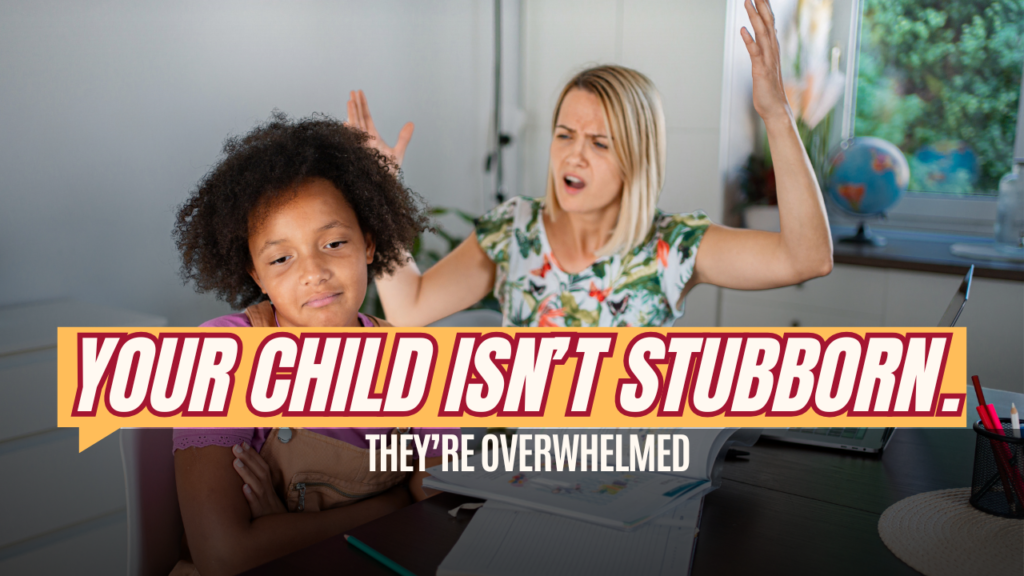
homework problem becomes a screaming match. The “no” becomes a slammed door. The small disappointment ruins the entire day. The intensity of the reaction doesn’t match the trigger because the trigger isn’t the real issue. The real issue is emotional overflow.
2. They've stopped sharing what's happening in their inner world.
When you ask “How was your day?” you get “Good.” When you ask “What’s wrong?” you get “Nothing.” When you try to connect, the door is literally or emotionally closed. This withdrawal isn’t defiance. It’s a child who doesn’t have the words for what they feel or doesn’t feel safe enough to share them.
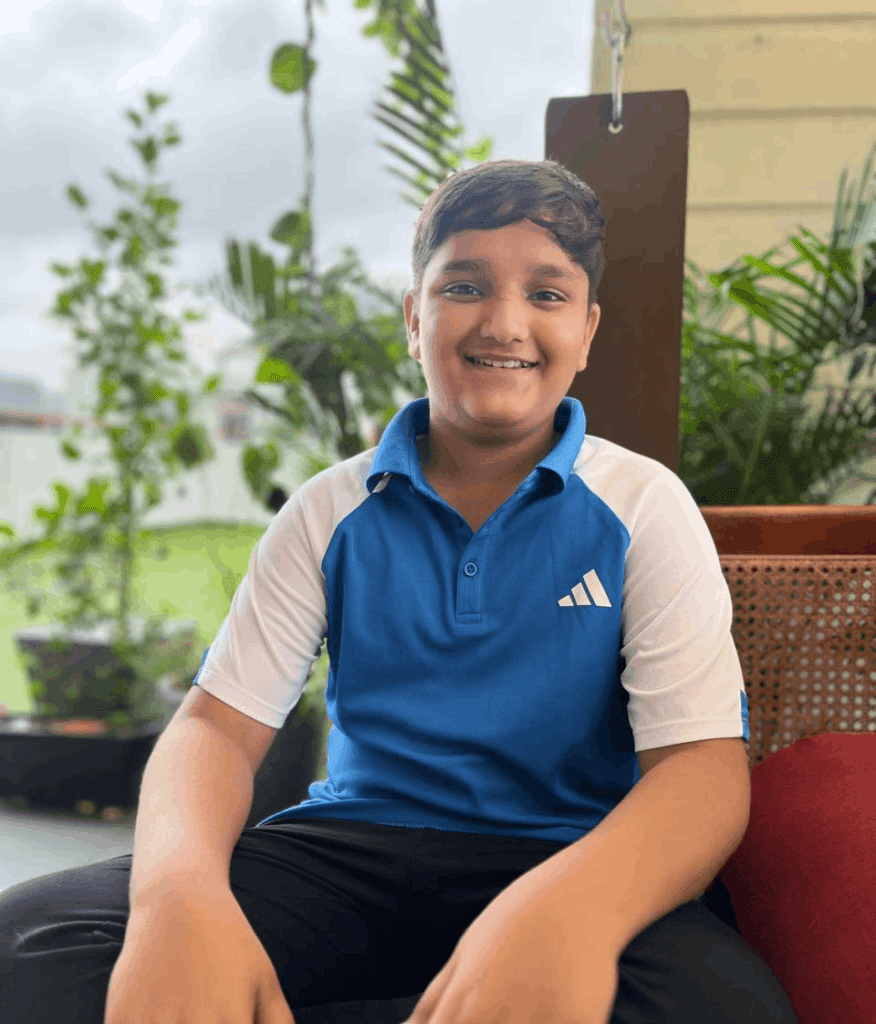
3. They can't sit with discomfort without reaching for a screen.
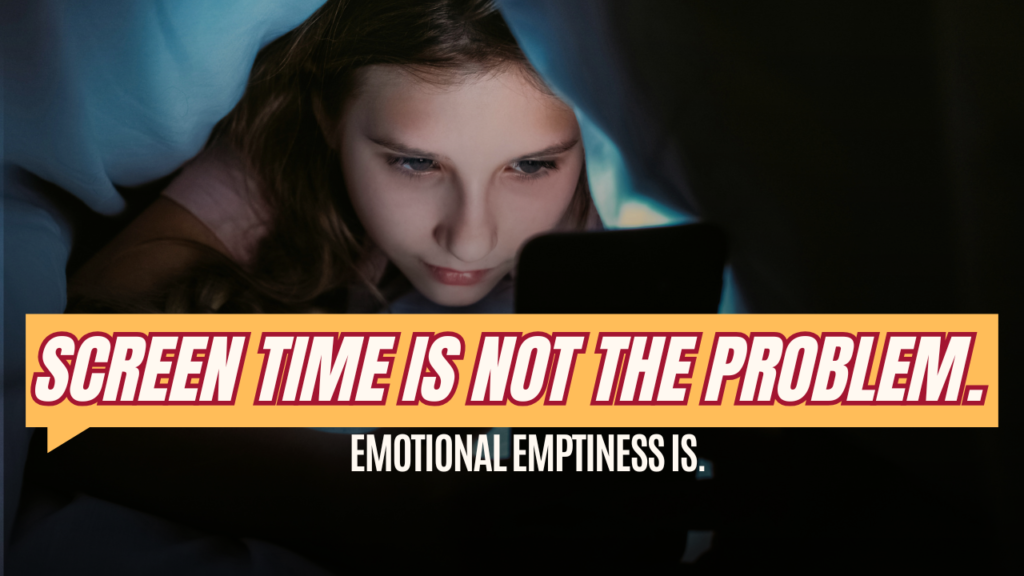
Boredom, waiting, disappointment, frustration any uncomfortable feeling immediately triggers a demand for distraction. The phone. The iPad. YouTube. Games. The screen isn’t the problem. The screen is the only emotional regulation tool they have. Nobody taught them any more.
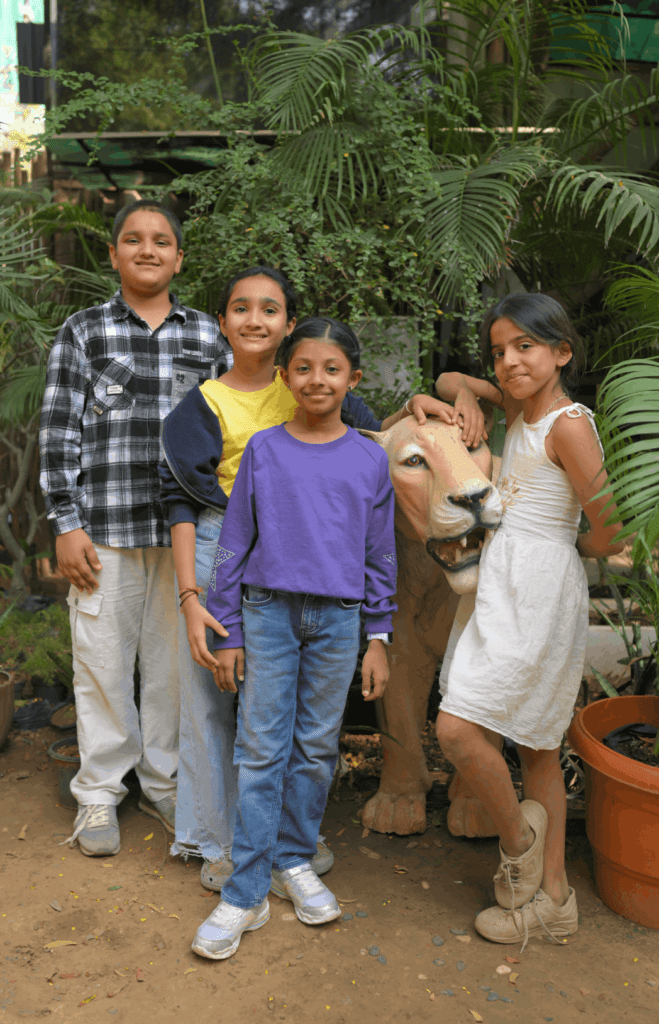
4. They compare themselves constantly.
“Why am I not as smart as her?” “He has more friends than me.” “Everyone is better than me.” Comparison is normal in small doses. But when it becomes a persistent pattern when it shapes your child’s self-image and drives anxiety it signals a deficit in self-trust. The child doesn’t know who they are outside of how they measure up.
5. They perform well but seem stressed.
Good marks. Good behaviour. Teachers don’t complain. But at home you see the stomach aches, the headaches, the trouble sleeping, the irritability. This child is coping through performance doing everything right on the outside while something accumulates on the inside. This is the most dangerous pattern because it’s invisible until it breaks.
6. They obey out of fear, not understanding.
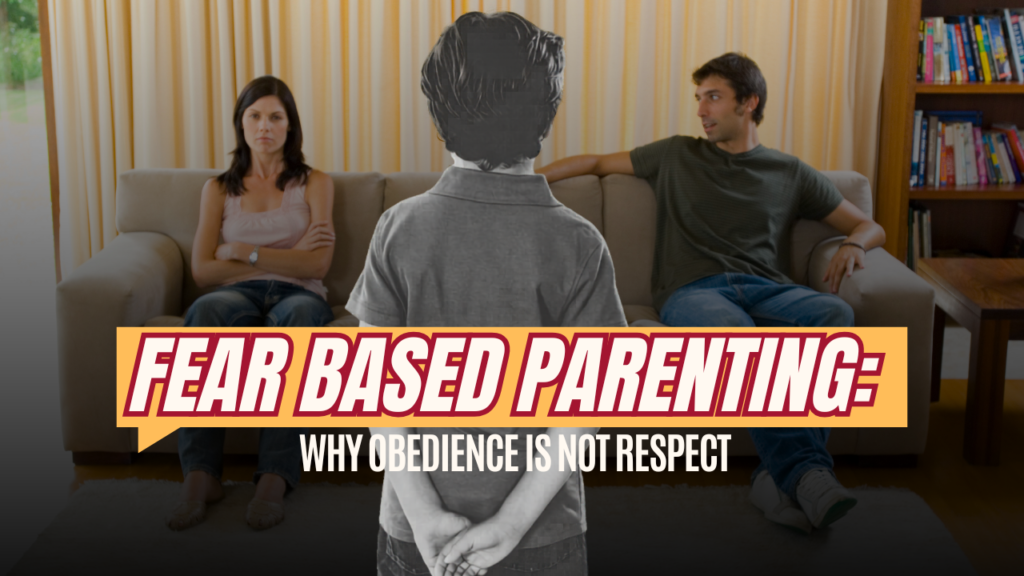
They listen to you. They follow rules. But they don’t come to you when they’re hurt. They don’t argue because they’re afraid to, not because they agree. Compliance without connection is not respect it’s survival.
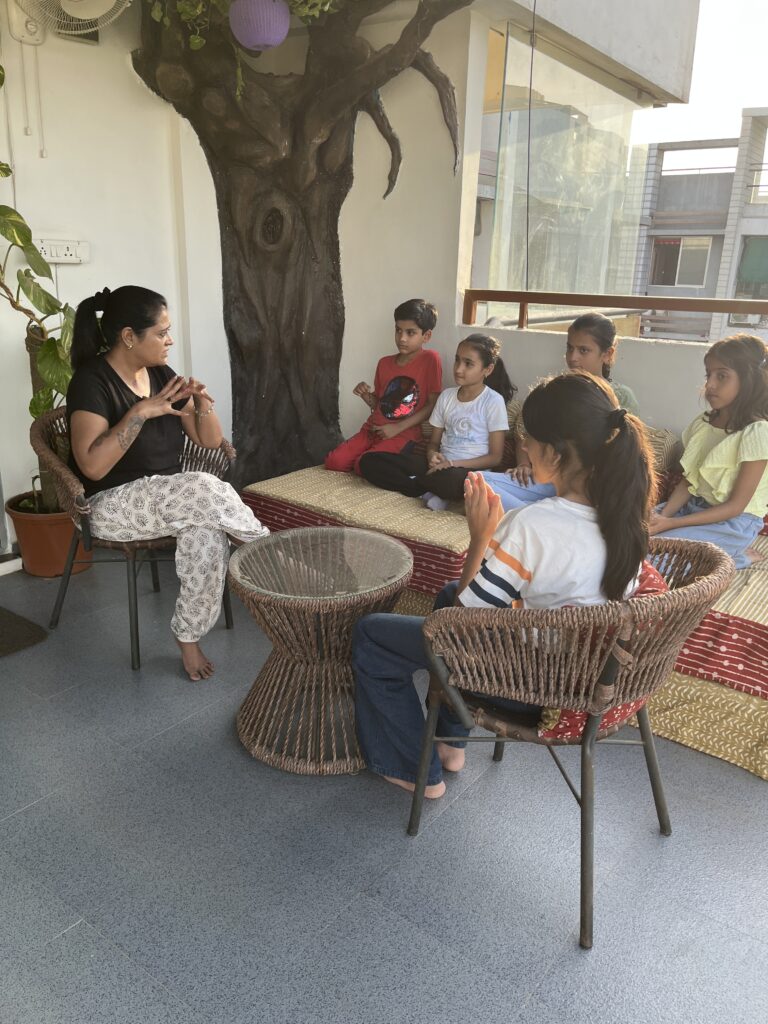
7. They say "I'm fine" but you know they're not.
This is the parent instinct that no article can replace. You know your child. You see the micro-shifts that no teacher or doctor sees. If something in your gut tells you that your child is carrying more than they can express, trust that instinct. It is almost always right.
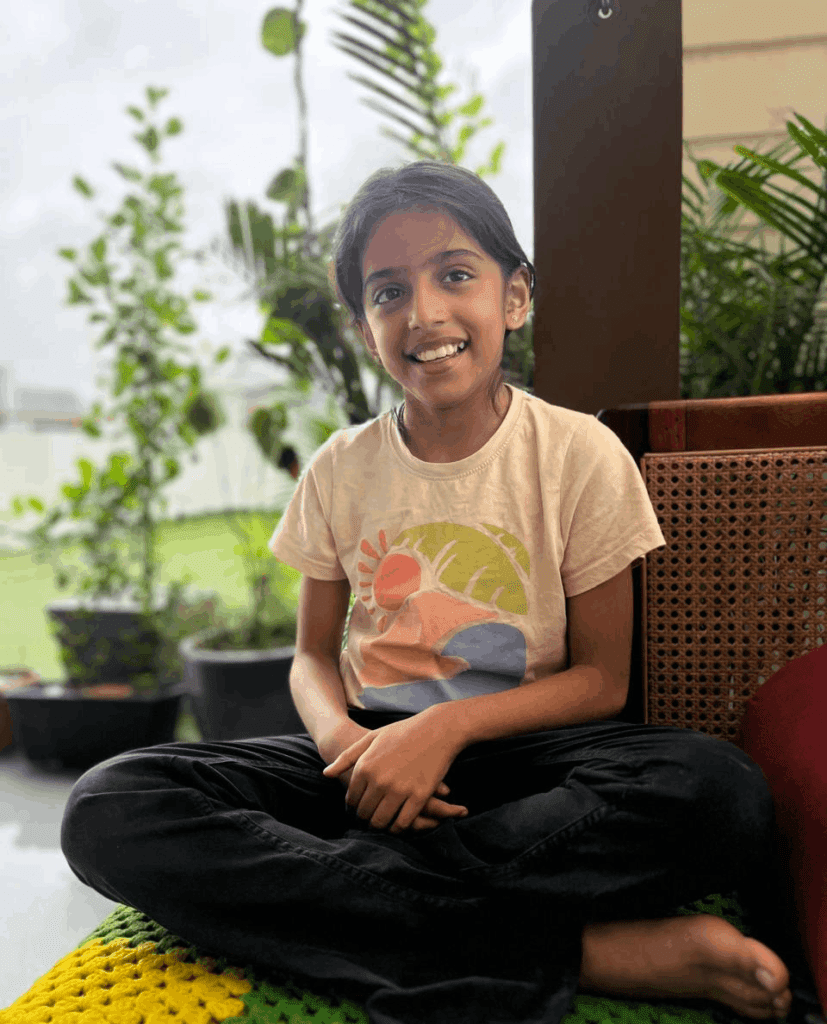
What You Can Do as a Parent, Starting Today.
Before any program, any professional, any intervention there are shifts you can make at home that begin changing the emotional climate your child lives in.
Shift 1: Stop asking "Why did you do that?" Start asking "What were you feeling?"
The first question demands justification. The second invites reflection. When you ask a child what they were feeling, you tell them that their inner world matters that you’re interested in what’s underneath the behaviour, not just the behaviour itself. You might get silence. You might get “I don’t know.” That’s okay. The question itself is the shift.
Shift 2: Name YOUR emotions out loud.
Children learn emotional vocabulary by hearing it modelled. When you say “I’m feeling frustrated right now because traffic was terrible and I’m running late” you teach your child that adults feel things too, that emotions can be named, and that naming them doesn’t make you weak. This is the most powerful emotional education tool you have and it costs nothing.
Shift 3: Separate the child from the behaviour.
“You always do this” makes the child feel defective. “I love you AND this behaviour needs to change” makes the child feel safe enough to grow. The word AND is the key. Not BUT. “I love you BUT…” negates the love. “I love you AND…” holds both truths at once.
Shift 4: Let them feel bad without rushing to fix it.
When your child is upset, your instinct is to make it stop. To fix it. To distract them. To say “It’s okay, don’t worry.” But every time you rush to fix their discomfort, you teach them that discomfort is dangerous, something to escape rather than understand. Sometimes the most powerful thing a parent can do is sit next to their child in discomfort and say nothing. Just be there. Just hold the space. Let them feel it and move through it at their own pace.
Shift 5: Reduce the comparison, starting with yourself.
If you compare your child to Sharma ji’s son, to their sibling, to their classmate your child learns that their worth is relative, not inherent. They learn to measure themselves against others instead of understanding themselves. This is the root of the comparison trap that follows them into adulthood. Catch yourself. Replace “Look how well they did” with “How do you feel about what YOU did?”
What Inner Literacy Education Is And Why I Created It
I created Inner Literacy Education because I saw the same pattern in 300+ families across Gujarat and India:
Parents who loved their children deeply. Children who were struggling emotionally. And between them a gap that no school, no tuition, no summer camp, and no personality development class was filling.
The gap was this: nobody was teaching children how their inner world works.
Inner Literacy Education is the practice of teaching children aged 8 to 14 how their mind, body, and emotions work together in simple, age-appropriate ways they actually understand and use in their daily lives.
It is not therapy. It is not counselling. It is not behaviour correction. It is education for the inner world.
The Becoming is Gujarat’s first and only Inner Literacy Education program. It runs every Sunday in Ahmedabad. Small batches of 8–10 children. 3 months. 12 sessions. Guided by me RasEsha Rabari NLP and NAC practitioner, mother of two grown adults, emotional wellness architect.
Over 3 months, children develop:
- Body awareness : catching the wave before it crashes
- Emotional vocabulary : naming 20+ emotions instead of just “fine” and “angry”
- Self-regulation : choosing a response instead of being hijacked by a reaction
- Relational intelligence : navigating friendships and family with awareness
- Self-trust : knowing who they are without needing external validation
Parents don’t see a dramatic overnight transformation. What they notice is quieter: fewer outbursts, calmer conversations, a child who starts sharing again, homework without wars, focus without force.
One mother in Ahmedabad described it like this: “After 4 weeks, my daughter started telling me what was bothering her with words, not behaviour. I didn’t know she had that much going on inside.”
She always did. She just never had the tools to express it.
FAQs
The Most Common Questions Indian Parents Ask
My child is doing fine in school. Does this still apply?
Yes. Being good at academics doesn’t mean being good at handling emotions, peer pressure, self-doubt, or family stress. Many of the highest-performing children are the most emotionally suppressed. They perform because they’ve learned that performance equals love. Inner Literacy Education gives them a foundation that doesn’t depend on achievement.
Isn't this what parents are supposed to teach at home?
In theory, yes. In practice, most of us were never taught this ourselves. We can’t teach what we never received. Inner Literacy Education is as much for the parent as it is for the child because when a child learns emotional vocabulary, the entire family dynamic shifts.
Is this like sending my child to a psychologist?
No. Psychology addresses disorders. Inner Literacy Education addresses the gap BEFORE disorders develop. It’s preventive, not clinical. Just as you send your child to school to learn math before they need it in life, Inner Literacy Education builds emotional capacity before life demands it.
Will this make my child 'soft' or 'too sensitive'?
The opposite. Emotional capacity builds resilience. A child who can name their fear and sit with it is STRONGER than a child who suppresses it and pretends it doesn’t exist. Suppression breaks under pressure. Capacity holds.
What if my child doesn't want to come?
Every child in The Becoming was hesitant on Day 1. By Week 3, they look forward to it. Children are not resistant to emotional education; they’re resistant to being lectured. The Becoming is not a classroom. It’s a space where children feel genuinely seen, heard, and understood often for the first time.
What to Do Now
If you’ve read this far, you’re not a casual reader. You’re a parent who is thinking deeply about their child’s emotional world. That already sets you apart.
Here are your next steps:
Start with self-reflection: Fill out the Understanding Your Child form 13 honest questions that help you see your child’s emotional world more clearly. It takes 5 minutes.
Written by RasEsha Rabari
Inner Literacy Education Expert & Emotional Wellness Coach, Ahmedabad, Gujarat.
NLP & NAC Practitioner.
Creator of Gujarat’s first Inner Literacy Education program for children aged 8–14.
Author.
300+ clients across Gujarat and India.
This guide is updated regularly. Last updated: May 2026.