
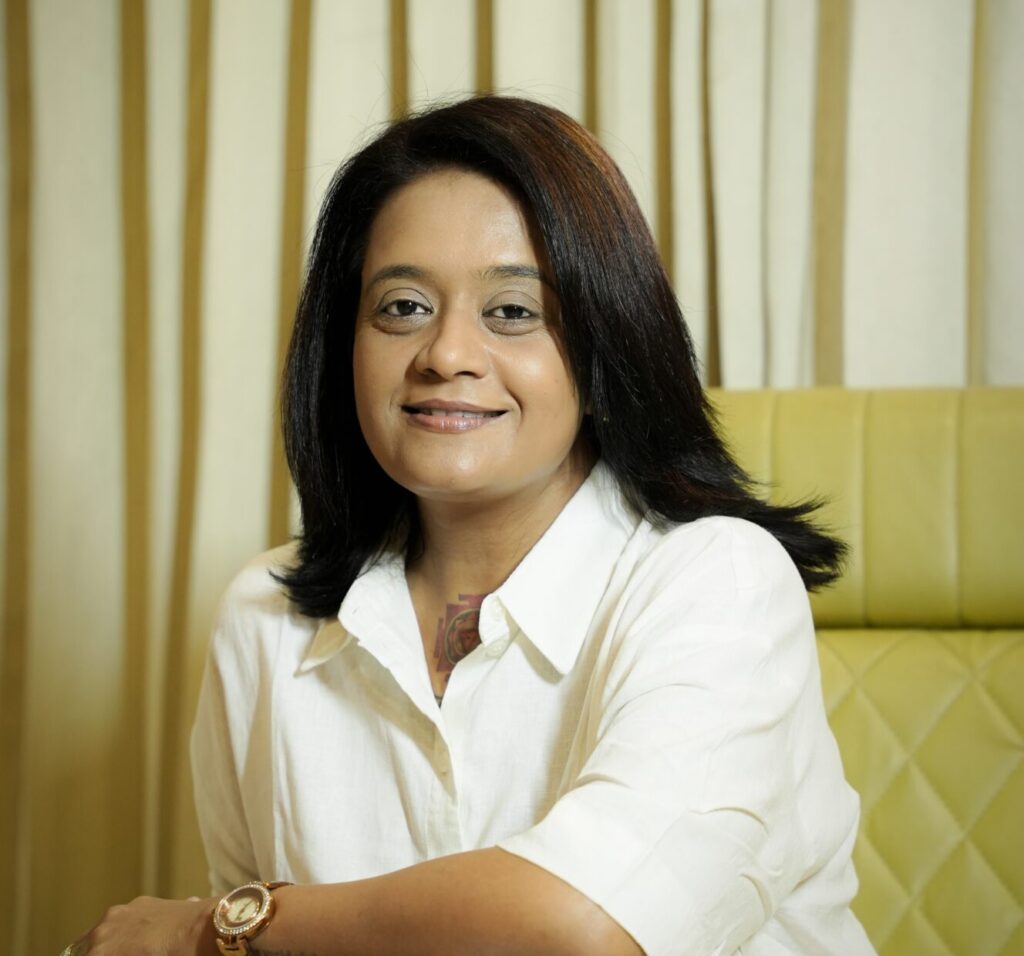
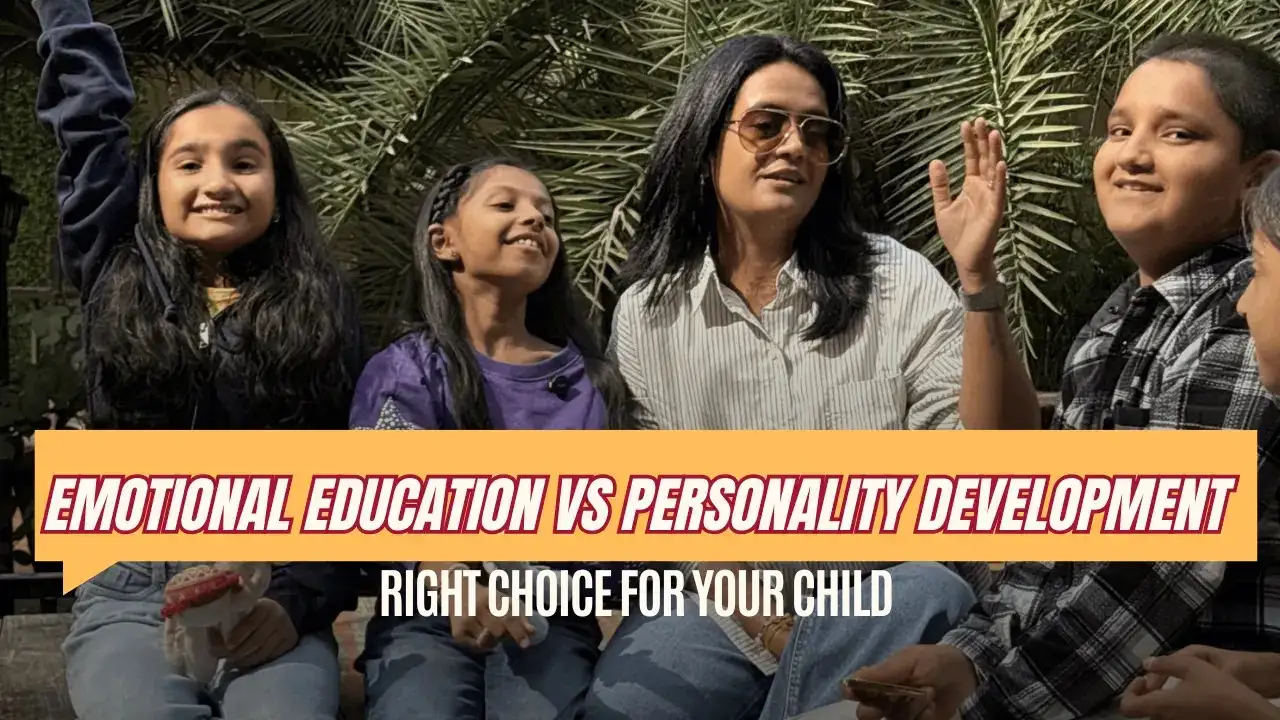
A parent in Ahmedabad recently asked me something that stopped me mid-sentence:
“RasEsha we enrolled our daughter in a personality development class six months ago. She speaks beautifully on stage now. But yesterday she locked herself in her room and cried for two hours because her best friend didn’t sit with her at lunch. Is that normal?”
That question captures everything this article is about.
Your child can learn to present confidently in front of 200 people and still not know what to do with one painful feeling when they’re alone. These are two completely different skills. One is personality development. The other is emotional education for children. Yet most parents in Ahmedabad are choosing between them without fully understanding what each one actually develops.
This article will give you that clarity. Not to tell you one is better than the other. But to help you see honestly which one your child actually needs right now. Because the wrong choice doesn’t hurt your child. It just wastes time addressing something that was never the real problem.
What Is Personality Development for Children?
Personality development classes teach children external skills how they present themselves to the world.
This typically includes public speaking, stage confidence, body language, communication skills, social etiquette, group participation, and sometimes basic leadership exercises.
These are genuinely useful skills. I don’t dismiss them. A child who can speak clearly, carry themselves with poise, and navigate social situations has a real advantage in school, in interviews, in life.
But here’s the boundary of personality development that most parents in Ahmedabad don’t see until later: it teaches your child how to SHOW UP in front of others. It doesn’t teach them how to UNDERSTAND what’s happening inside themselves.
A child can learn to speak on stage without shaking. That same child may still not know what to do when shame floods their body after being scolded. They may still not know how to sit with rejection without spiralling. They may still not know why they feel angry all the time, but can’t name it. These can also be early signs of academic stress, not just confidence issues.
Personality development builds the exterior. And sometimes the exterior is exactly what your child needs. But sometimes it’s not.
What Is Emotional Education for Children?
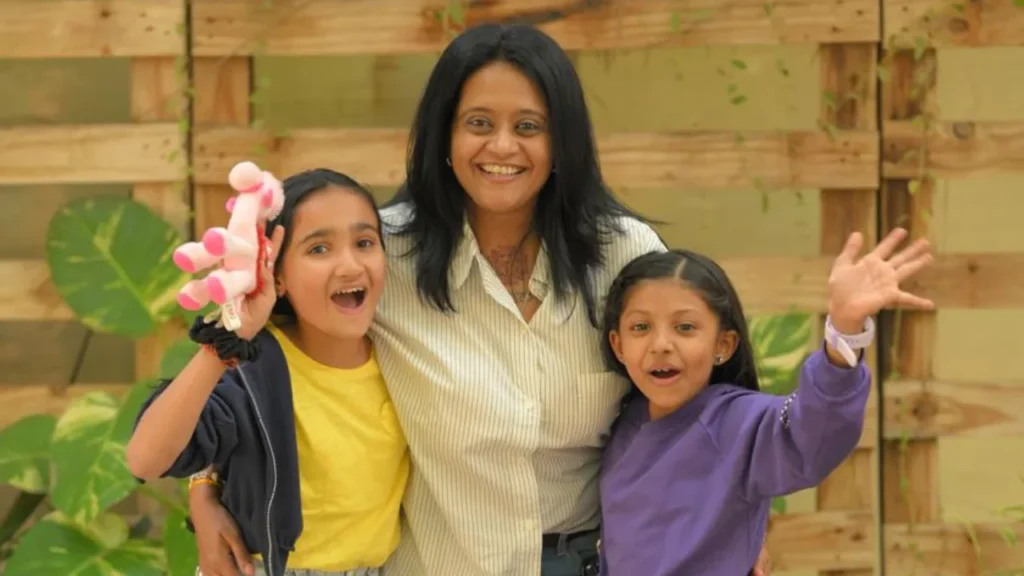
Emotional education teaches children how their inner world works, how their mind, body, and emotions function together in daily life.
This is what I call Inner Literacy Education the practice of teaching children to recognise what they’re feeling in their body before it becomes behaviour, to name emotions with precision instead of just “I’m fine” and “I’m angry,” to regulate their responses from genuine understanding rather than fear of punishment, and to trust themselves from the inside out not from marks, not from applause, not from someone else telling them they’re good enough.
Emotional education doesn’t teach your child how to appear confident. It teaches them how to actually BE confident rooted in self-understanding, not performance.
And here’s the difference that matters most in Indian families: personality development works in controlled settings: the stage, the classroom, the social gathering. Emotional education works everywhere, especially under pressure. At home when they’re overwhelmed. At school when a friend betrays them. At 2 AM when their mind won’t stop racing before an exam. In the moments when nobody is watching and there’s no audience to perform for.
That’s where the real test is. And that’s where emotional education shows its value.
Personality Development vs Emotional Education: The Core Differences
Let me lay this out clearly so you can see the difference side by side:
| Aspect | Personality Development | Emotional Education |
|---|---|---|
| What it teaches | Teaches how to show up externally. | Teaches how to understand internally. |
| Focus | Focuses on skills such as communication, confidence, and etiquette. | Focuses on awareness, emotions, the mind, and behaviour patterns. |
| Approach | Practice-based through repetition and improvement. | Understanding-based: know why, then act. |
| What changes | Changes how the child presents to others. | Changes how the child relates to themselves. |
| Where it works | Works in social situations, presentations, and group settings. | Works in all situations, especially under pressure, alone, and at home. |
| Typical duration | Usually 4 weeks to 3 months. | Usually 6 months because depth takes time. |
| Best for | Children who need social tools and external polish. | Children who need inner clarity and self-understanding. |
| Risk if skipped | Children may struggle in social settings. | Children may perform well externally but collapse internally. |
| Example outcome | The child speaks confidently in a school assembly. | The child pauses before reacting when a friend upsets them. |
| In an Indian parent’s words | “She presents well.” | “He told me what was bothering him instead of shutting down.” |
| Bottom line | Builds external confidence and social skills. | Builds emotional resilience and self-awareness. |
Both are real outcomes. Both have value. The question is which one does YOUR child need more urgently?
Where Parents in Ahmedabad Get Confused
The confusion happens because both look like “something good for my child.” Both involve weekly sessions. Both have confident-sounding facilitators. Both promise improvement.
But here’s where parents in Ahmedabad consistently get stuck. It’s also why more families are choosing emotional education for children before investing in another confidence-building program.
They enrol their child in personality development because the BEHAVIOUR looks like a confidence problem. The child is shy. The child doesn’t speak up. The child avoids group activities. So the parent thinks the confidence class will fix this.
But shyness is not always a confidence problem. Sometimes shyness is a SAFETY problem. The child doesn’t speak up because they’ve learned that expressing themselves leads to judgment, comparison, or dismissal. They don’t avoid groups because they lack social skills, they avoid groups because they don’t trust themselves in those settings.
Personality development teaches the child to push through that discomfort. To perform confidence even when they don’t feel it. And for some children that push is exactly what they need.
But for other children the ones who are withdrawn because of deeper emotional patterns that push creates a wider gap between who they are and who they’re performing. They get better on stage. They get worse inside.
That’s where the confusion becomes costly. Not because personality development harmed them. But because it addressed the symptom while the root stayed untouched.
Which One Does Your Child Actually Need?
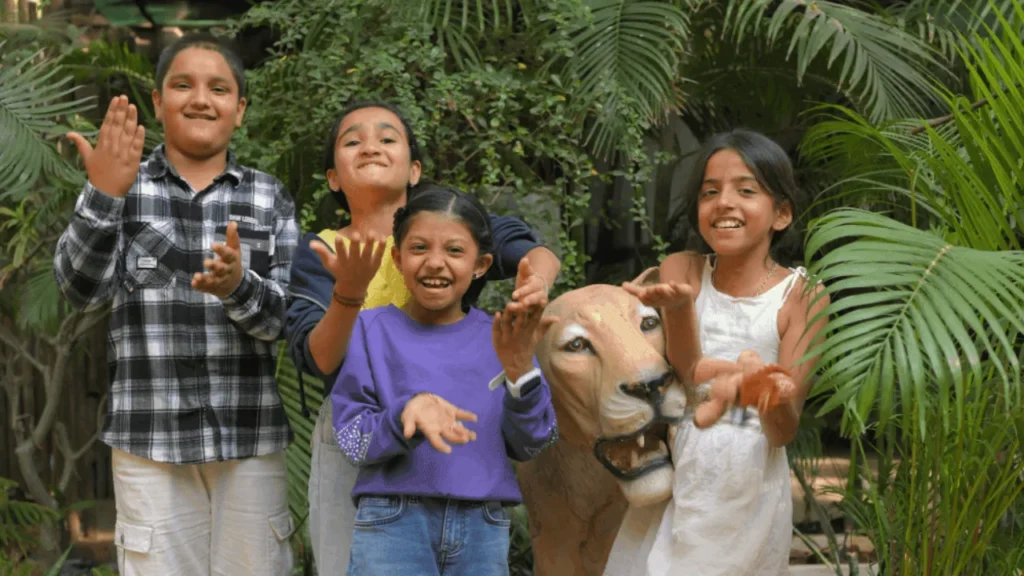
Your child may benefit most from personality development if:
They’re socially capable but lack presentation skills. They have good emotional awareness but struggle with public expression. They’re comfortable at home but freeze in group settings. They need structured practice in communication, not deeper self-understanding. They’re emotionally stable but need external polish.
Your child may benefit most from emotional education if:
They react disproportionately to small things like homework, a “no,” a sibling’s comment. They’ve gone quiet and you can’t reach them. They say “I’m fine” when they’re clearly not. They compare themselves to classmates constantly. They’re glued to their phone and explode when it’s taken away. They perform well at school but fall apart at home. They’re the “good child” who never complains and that worries you more than it reassures you.
What if they need both?
Many children do. And that’s perfectly fine. But the order matters and that’s what the next section is about.
Why the Order Matters
This is the insight most parents miss and it changes everything.
If your child does personality development FIRST and emotional education later they learn to perform before they learn to understand. The performance becomes a mask. The child gets better at hiding what they feel. They look more confident. But the internal struggle continues underneath now even harder to detect because the mask is better.
If your child does emotional education FIRST and personality development later they understand themselves before they learn to present themselves. The presentation isn’t a mask, it’s an expression. The confidence isn’t manufactured, it’s real. When they speak on stage, they’re not performing with confidence. They’re speaking from it.
I always recommend the same thing to parents in Ahmedabad: build the inside first. Then polish the outside.
A child who understands their emotions, trusts themselves, and can name what they feel will naturally develop presentation skills, social confidence, and communication abilities. Because real confidence doesn’t need training. It needs a foundation.
But a child who can present beautifully without understanding themselves that child is one difficult moment away from cracking the whole structure.
Inside first. Outside second. That’s the order.
Emotional Education in Ahmedabad: What Is Available
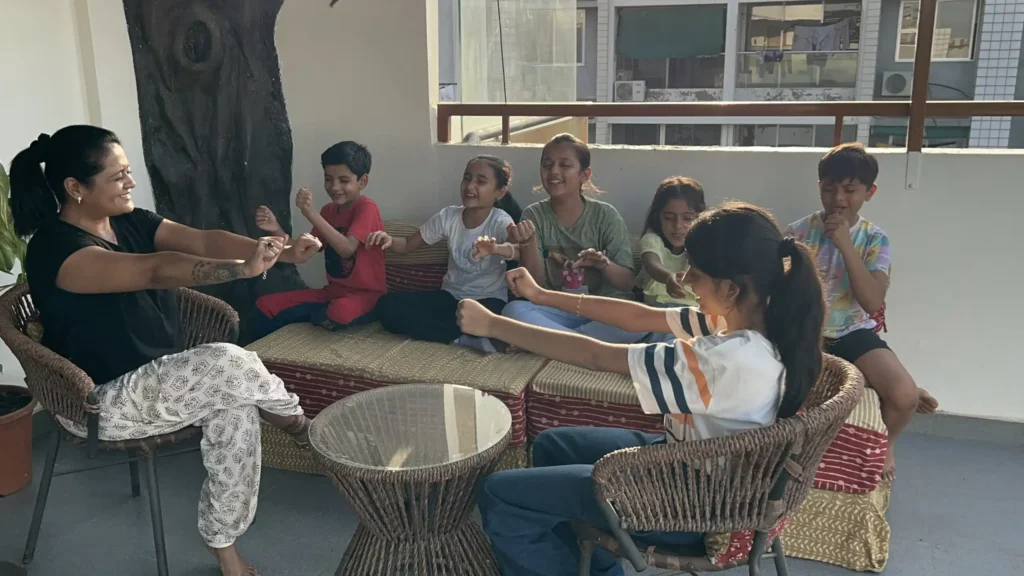
Personality development classes are everywhere in Ahmedabad. You’ll find them in every neighbourhood, every mall, every coaching centre.
Emotional education is real, structured, depth-focused emotional education is rare. In most Indian cities, it doesn’t exist at all.
In Ahmedabad, The Becoming is Gujarat’s first and only Inner Literacy Education program for children aged 8 to 14. 6 months. 24 sessions. Every Sunday. Small batches of 8–10 children. Created and guided by me, RasEsha Rabari 9+ years of NLP and Neuro-Associative Conditioning practice, ICF certified, 300+ families across Gujarat.
This isn’t a class your child endures. Not a single child has ever wanted to miss a session. Because for the first time, someone is teaching them something that makes their everyday life easier and they can feel the difference immediately.
If you’re trying to decide between personality development and emotional education start by understanding where your child actually is. The Understanding Your Child form takes 5 minutes and shows you clearly what your child needs most.
→ Book a Free 15-Minute Discovery CallFrequently Asked Questions
Q: What is the difference between personality development and emotional education for children?
Personality development builds external skills how your child speaks, presents, and carries themselves in social settings. Emotional education builds internal capacity how your child understands their own emotions, regulates reactions, and trusts themselves. One shapes how they appear to others. The other shapes how they relate to themselves.
Q: Is personality development enough for my child?
It depends on what your child is actually struggling with. If they need social skills and presentation confidence, yes, personality development helps. But if your child is emotionally reactive, withdrawn, anxious, screen-dependent, or saying “I’m fine” when they’re not personality development won’t reach the root. That’s where emotional education comes in.
Q: Are there emotional education programs for children in Ahmedabad?
Yes. The Becoming by RasEsha Rabari is Gujarat’s first and only Inner Literacy Education program for children aged 8–14. Every Sunday in Ahmedabad. Small batches. 6 months. 24 sessions. Guided personally by RasEsha.
Q: What age should children start emotional education?
The ideal window is 8 to 14. This is when the brain undergoes its most intense emotional restructuring. The tools a child learns during this period become the emotional operating system they carry for life. Starting here means everything that follows teenage years, relationships, career sits on a solid inner foundation.
Q: Can a child do both personality development and emotional education?
Absolutely. Many children benefit from both. But the order matters. Emotional education first so the child understands themselves. Personality development second so the external expression is built on genuine confidence, not performance. Inside first. Outside second.
Q: What does personality development teach children that emotional education does not?
Personality development specifically teaches stage presence, public speaking, body language, social etiquette, and group communication skills. Emotional education doesn’t focus on these external presentation skills directly. However, children who complete emotional education often develop these skills naturally because real confidence expresses itself without needing to be taught ho