


If you’ve ever thought “my child is smart but can’t focus,” you’re noticing something real — and “try harder” has never been the answer.
I’ve noticed something changing over the last few years through my work with NLP for children and emotional education in Ahmedabad.
The parents reaching out to me aren’t coming because their child is failing. They aren’t coming because a teacher called them in for a meeting. They aren’t coming because the marks suddenly dropped.
They’re coming because something doesn’t add up.
Their child is sharp. Picks things up faster than most. Asks questions that catch adults off guard. Remember things nobody expected them to remember. Teachers use words like “bright” and “intelligent.”
But ask that same child to sit with homework for twenty minutes and it turns into a two-hour battlefield
If you’ve ever caught yourself saying “my child is smart but can’t focus” you’re not imagining the contradiction.
You’re noticing something real. And understanding what’s actually going on will help you far more than repeating “try harder” for the hundredth time.
Because “try harder” has never been the answer. And deep down, you already know that.
Why Smart Kids Struggle to Focus (It’s Not What You Think)

Here’s one of the biggest myths we’ve built as a society: that intelligence automatically comes with concentration.
It doesn’t. Not even close.
Your child can learn fast. Your child can solve problems that surprise you. Your child can think in ways that make adults pause.
None of that, not a single bit of it automatically teaches them how to sit with something that’s boring, repetitive, or emotionally difficult.
Focus depends on something completely separate from intelligence. It depends on what scientists call executive function: the brain’s ability to regulate attention, manage impulses, organise thoughts, and stay engaged even when things get hard or uninteresting.
Intelligence and focus are two different systems living in the same brain. A child can be exceptional in one and genuinely struggling in the other.
I’ve worked with over 300 families. This isn’t unusual. In fact, bright children struggle with focus far more often than parents expect because everyone assumes that if the child is smart, focus should be automatic.
It isn’t. And that assumption is where the frustration begins. For you AND your child.
What’s Actually Getting in the Way
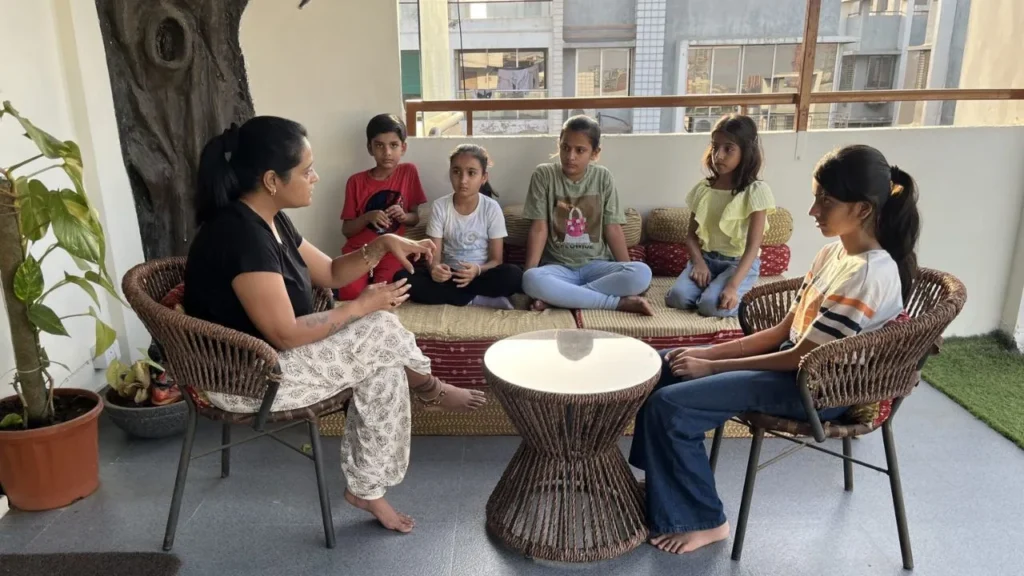
After 9+ years of working with children aged 8 to 14 in Ahmedabad, I’ve seen the same patterns show up again and again. Let me walk you through the real reasons, not the textbook answers, but what I actually see in the room.
When you have a difficult day, you usually know why. You can name it “traffic was terrible,” “that meeting drained me,” “I had an argument with someone.
1. Emotional Overload

Your child can’t.
They carry disappointment from school, hurt from a friend’s comment, pressure from a test they didn’t tell you about, a comparison that sits like a stone in their chest. These aren’t small things to a 10-year-old. They’re enormous. And they don’t disappear when the school bell rings. They follow your child home. They sit at the homework table. They compete for attention.
I’ve watched children stare at an open notebook for fifteen minutes not because they don’t understand the work. Because their mind is still replaying something that happened at lunch.
From the outside, it looks like a distraction. From the inside, it feels like emotional noise that nobody taught them to turn down.
Sometimes the answer to “why can’t my child focus” has nothing to do with academics. It’s entirely emotional, and that’s where the right emotional wellness support can make a lasting difference.And until you address what’s happening underneath, no amount of “sit down and concentrate” will change anything.
2. Anxiety Wearing the Mask of Laziness

This one breaks my heart because it gets misdiagnosed constantly.
Children today are carrying more pressure than most parents realise. Marks. Rankings. Competitions. Olympiads. Tuitions. For many families, this constant pressure becomes academic stress in school children, fuelled by endless comparison with classmates, cousins, and neighbours’ children.
Even children in primary school feel like they’re being evaluated every single day. Some respond by working harder. Others freeze.
I’ve seen children erase the same answer four times because they can’t bear the thought of getting it wrong. Children who spend more time worrying about making a mistake than actually doing the work. Children who sit at the desk looking blank not because they’re lazy, but because their brain is so busy preparing for failure that there’s no capacity left for focus.
An anxious mind doesn’t concentrate. It survives. And survival mode looks exactly like “not paying attention,” which is why parents and teachers miss it entirely.
Your child isn’t choosing not to focus. Their nervous system is choosing FOR them. And until someone teaches them what’s happening inside and how to work with it instead of against it the cycle continues.
3. Boredom That Nobody Recognises

This one surprises parents. But I see it all the time.
Sometimes bright children aren’t distracted because the work is too hard. They’re distracted because it isn’t hard enough.
They understood the lesson halfway through the teacher’s explanation. Their mind has already moved on. The classroom hasn’t changed but their brain has already left the building.
From the outside, it looks like carelessness. Inside, their mind is searching for something that matches the speed at which they naturally think.
Not every child who struggles with focus needs harder work. But many need learning that keeps them genuinely engaged mentally AND emotionally. When the inner world is stimulated, focus takes care of itself.
4. What Screens Have Done to the Brain

This is probably the biggest shift I’ve noticed over the last decade. And I want to be honest about it without blaming parents because nobody signed up for this knowingly.
Your child now spends hours every day in environments designed by teams of engineers to capture and hold attention. Every swipe brings something new. Every game delivers instant dopamine. Every video changes within seconds. The brain gets trained to expect constant, effortless stimulation.
Then we ask that same brain to quietly read two pages from a textbook. Of course it feels impossible.
The problem isn’t that books have become less interesting. It’s that screens have fundamentally changed what your child’s brain expects. When instant stimulation becomes the baseline, everyday learning feels unbearably slow.
And here’s the painful irony: your child can sit focused on a screen for three hours straight. So you KNOW they can focus. They just can’t focus on anything that doesn’t deliver stimulation at the speed their brain now demands.
I’m not saying screens are evil. I’m saying they’ve rewired expectations. And no child is equipped to manage that rewiring on their own. They need someone to show them how their brain actually works so they can take back control of their own attention.
5. The Body Nobody’s Listening To

Sometimes the answer isn’t psychological. It’s physical. And we miss it because we’re looking in the wrong place.
A child who hasn’t slept enough doesn’t just wake up tired. They wake up with a brain that has to work twice as hard to do simple things. Attention slips faster. Frustration comes quicker. Small distractions that a rested brain would ignore become impossible to resist.
Movement matters too. A child who sits still all day at school, then tuition, then homework, then dinner has no opportunity to regulate their energy naturally. The restlessness you see at the homework table isn’t defiance. It’s a body screaming to move.
Nutrition plays a role too. A child running on processed snacks and sugary drinks experiences energy peaks and crashes that directly affect concentration throughout the day.
Parents sometimes ask me whether they should enrol their child in another tuition.
My first question is usually much simpler: “How much sleep is your child getting? How much are they moving? What are they eating?”
Because sometimes the foundation needs attention before anything else makes sense.
6. The Skill Nobody Taught Them

Here’s something we assume far too often: that children automatically know HOW to focus.
But who actually teaches them?
The school teaches mathematics, science, languages, and history. Tuitions repeat what school already covered. Activities fill the schedule.
But nobody, not a single person in your child’s life, has sat them down and taught them: what to do when your mind starts wandering. How to notice distraction BEFORE it takes over. How to calm yourself when frustration shows up. How to bring yourself back after your attention drifts.
We expect children to regulate themselves without ever showing them how. And when they struggle when the focus slips, when the homework takes three hours, when they can’t sit still we call it a behaviour problem.
It’s not a behaviour problem. It’s a missing skill. And like any skill, it can be taught through the right emotional coaching for kids, helping children understand and manage their attention instead of fighting it.
7. When Something Deeper Is Happening

This is the heart of what I do. Not fixing children. Teaching them how their own system works so they can work WITH it instead of fighting against it every single day.
Sometimes and I want to be honest about this, there IS something neurological happening.
If your child struggles to focus across different environments not just homework, but conversations, instructions, play, family interactions it may be worth exploring whether a neurodevelopmental difference like ADHD is involved.
ADHD affects executive functioning. Not intelligence. Many highly intelligent children have ADHD. Many successful adults spent years being labelled “careless” or “lazy” before discovering their brain simply works differently.
This isn’t a label to fear. It’s information that helps. When you understand what’s actually happening, you know what to do about it. And that clarity for both parent and child is worth more than years of guessing.
If you suspect this might apply, please consult a qualified professional. The Becoming complements clinical support beautifully but it’s not a substitute for it.
When Focus Isn’t Really About Focus
This is where most conversations about concentration miss the point entirely. And this is where my work lives.
Not every attention problem is actually an attention problem.
Sometimes it’s an emotional problem wearing attention’s clothes.
A child who feels overwhelmed loses concentration. A child who carries anxiety about disappointing you freezes before starting. A child who was humiliated in class last week can’t be present in class this week. A child who doesn’t understand WHY they feel angry spends all their mental energy fighting the anger instead of doing the work.
From the outside, every one of these children looks distracted. Inside, they’re navigating emotions they’ve never been taught to understand.
I think about it like this and this is something I tell parents often:
An egg cracked from the outside life ends. An egg cracked from the inside life begins.
When we force focus from the outside stricter rules, more discipline, louder instructions, bigger consequences we crack the egg from the outside. The child complies. For a while. But nothing changes inside. The pressure just builds until something breaks.
But when a child understands their own inner world when they learn WHY their mind wanders, WHAT their body is telling them, HOW their emotions are hijacking their attention they crack open from the inside. Not from pressure. From understanding. And what emerges is a child who can focus not because someone is forcing them, but because they’ve learned how their own system works.
That’s expanding emotional capacity. That’s Inner Literacy Education. And that’s what creates change that lasts not for the next exam, but for life.
When a child’s emotional awareness grows, their ability to concentrate follows naturally. Not overnight. But consistently. And far more reliably than any amount of “pay attention” or “try harder” ever could.
If Your Child Is Struggling to Focus What You Can Do Right Now

Before anything else, stop assuming your child isn’t trying.
They are. More than you realise. They’re trying so hard that the trying itself is exhausting them. And when they hear “you’re not trying hard enough” from the person they love most it doesn’t motivate them. It breaks something.
Start here instead:
Become curious before becoming frustrated. Notice WHEN your child’s attention disappears. Is it always during homework? Only after school? Only when they’re tired? Only when something emotional happened? Sometimes these patterns are early signs of academic stress in school children rather than a focus problem. Patterns tell you more than any single moment ever will.
Help them feel settled before asking them to focus. Sometimes five minutes of genuine conversation not about school, not about homework, just about THEM changes the next thirty minutes of studying entirely. A child who feels emotionally seen can access their brain. A child who feels emotionally invisible cannot.
Break large tasks into smaller ones. A child looking at an entire page of math problems feels overwhelmed. A child looking at “just do the first three, then we’ll take a break” feels capable. Same work. Different emotional experiences.
Protect sleep the way you protect study time. If your child is sleeping less than 8 hours no amount of tuition, tutoring, or concentration tips will compensate. Sleep is the foundation underneath everything else.
Reduce screen time gradually, not suddenly. Taking the phone away overnight creates a war. Reducing it by 15 minutes each week creates a new normal. Your child’s brain needs time to adjust its expectations.
Most importantly, teach your child to notice what’s happening inside them. Not “focus harder.” But “what’s going on right now? What are you feeling? Where in your body do you feel it?” This is the beginning of self-regulation. And self-regulation is the foundation of sustainable focus.
And if your child’s difficulty persists despite all of this don’t hesitate to seek guidance. Asking for help isn’t admitting something is wrong with your child. It’s choosing to understand them more deeply. That’s not weakness. That’s the strongest thing a parent can do.
The Better Question
The question most parents come to me with is: “How do I make my child focus?”
After 9 years and 300+ families, I think there’s a better question:
“What is making focus difficult for my child in the first place?”
Because children rarely wake up deciding not to pay attention. They’re responding to something. Something emotional. Something physical. Something developmental. Something environmental. And sometimes simply because nobody ever taught them how attention actually works.
When we stop treating focus as a discipline problem and start seeing it as an education gap everything changes. Not just for your child. For your relationship with them.
Because the moment you stop saying “focus!” and start saying “I see you’re struggling let’s understand why” your child hears something they’ve been desperate to hear:
“I’m on your side.”
And a child who knows their parents are on their side that child can do anything.
Frequently Asked Questions
Why is my child smart but can’t focus?
Because intelligence and focus are two completely different abilities. Intelligence is how your child understands and processes information. Focus is how they stay with something when it stops being interesting or becomes difficult. A child can be highly intelligent while still finding it genuinely hard to sustain attention because nobody taught them how attention works. These are two separate systems in the brain. One doesn’t guarantee the other.
Does trouble focusing mean my child isn’t intelligent?
Absolutely not. Many of the brightest children I’ve worked with in Ahmedabad struggle with concentration. Difficulty focusing tells you about attention regulation not about intelligence. Some of the most gifted children and most successful adults spent years being called “distracted” before someone understood that their brain simply worked differently.
How can I improve focus and concentration in my child?
Start by understanding what’s causing the difficulty. Don’t jump to solutions before you understand the root. Emotional stress, anxiety, poor sleep, excessive screen time, and missing self-regulation skills are all common contributors. Support your child’s emotional wellbeing first. Create healthy routines around sleep, movement, and nutrition. And most importantly help your child understand how their own mind works. When they know WHY their attention drifts, they learn how to bring it back. That’s a skill for life, not just for homework.
Is my child’s focus problem related to emotions?
Very often, yes. Children who feel anxious, overwhelmed, frustrated, or emotionally disconnected frequently appear distracted because their brain is busy processing emotions instead of processing the task in front of them. Helping children understand and regulate their emotions is one of the most effective ways to improve concentration. In my experience, when emotional awareness grows, focus follows naturally.
Should I be worried if my smart child can’t concentrate?
Stay observant before becoming worried. Every child has periods where focus fluctuates, that’s normal. But if the difficulty is consistent across different settings, affects daily functioning, and continues despite supportive changes at home, it’s worth seeking a professional assessment. Not to label your child. To understand them. And understanding is always the first step toward helping.